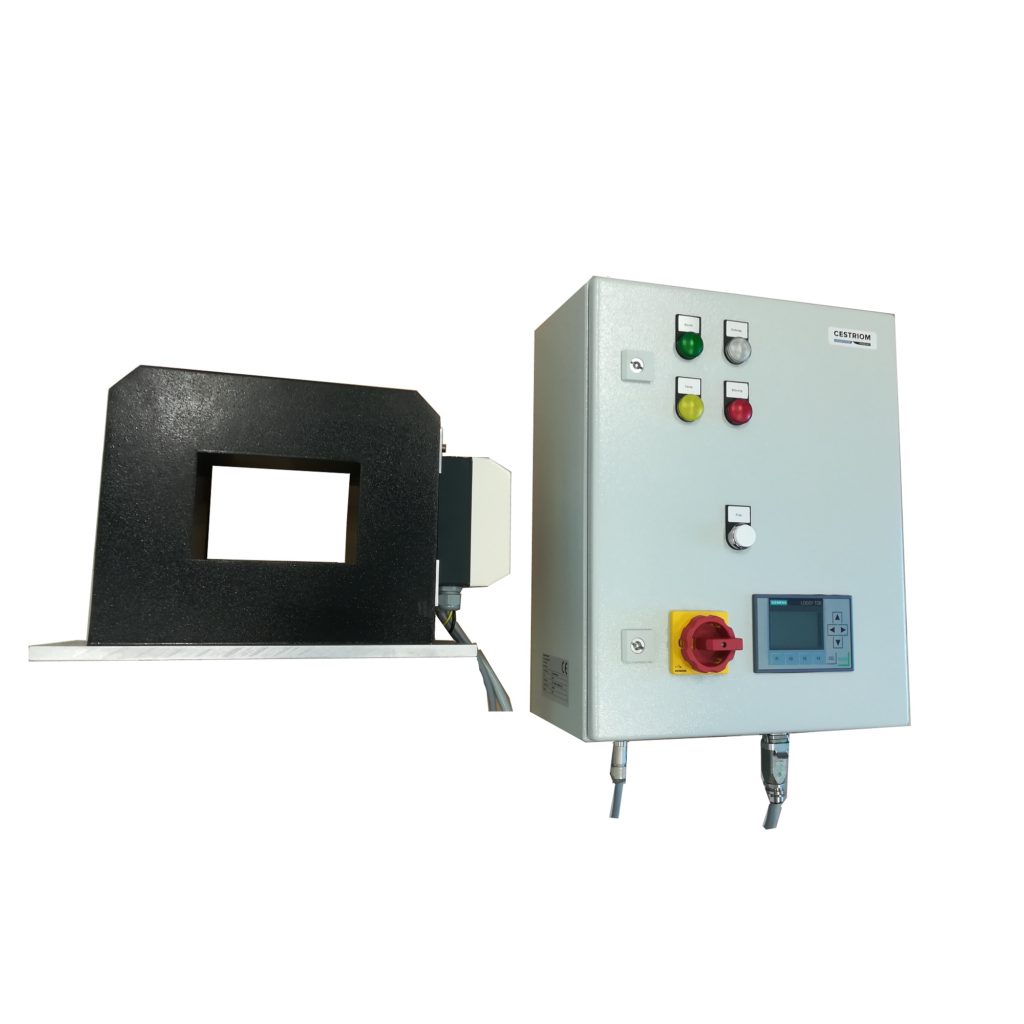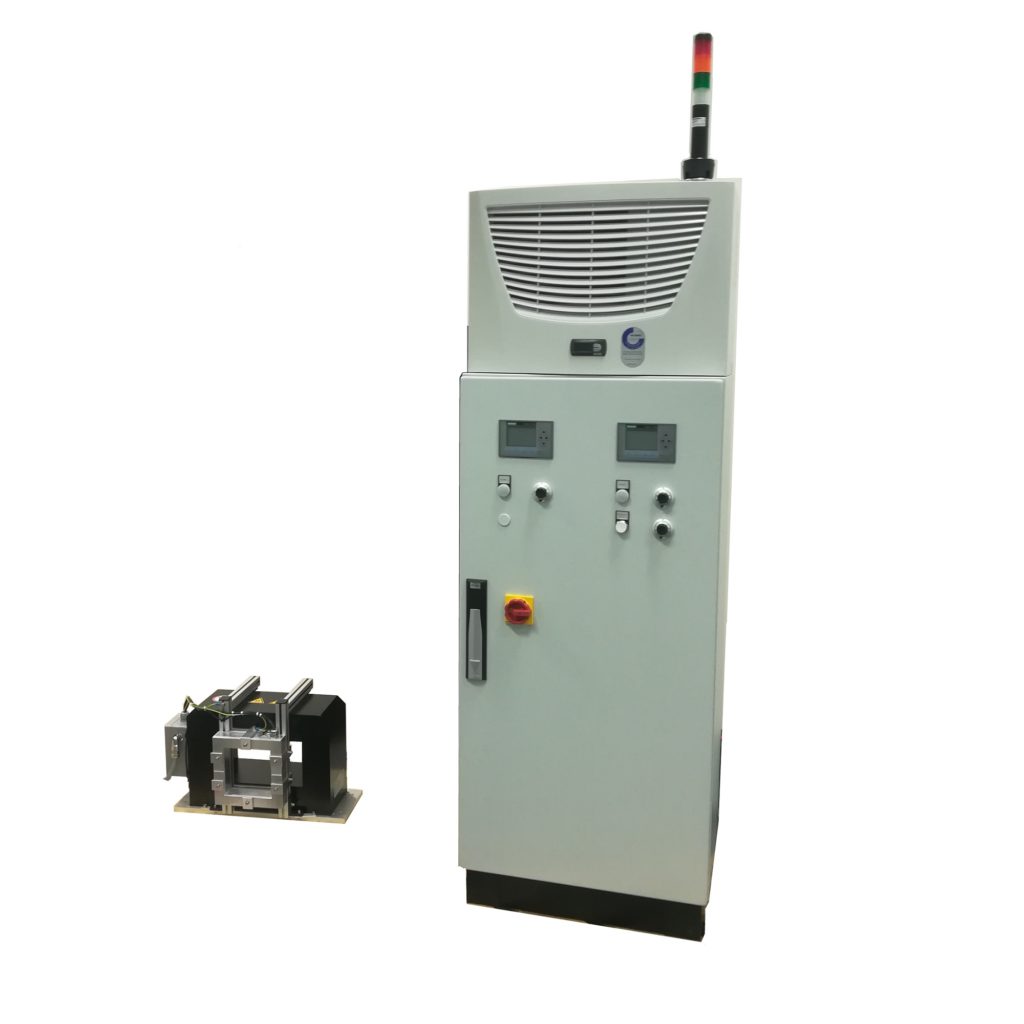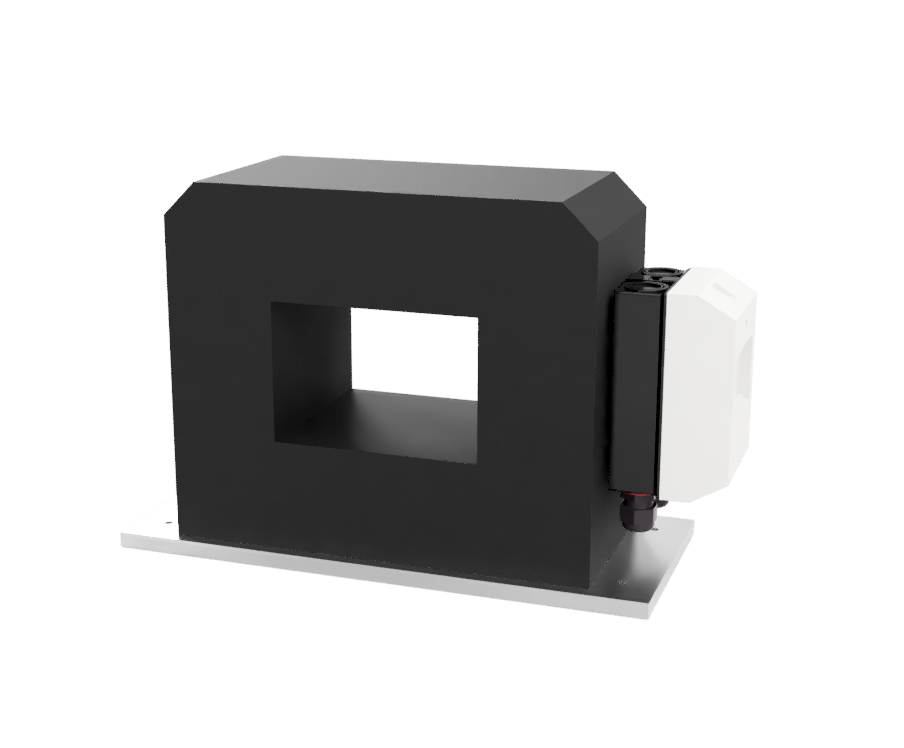
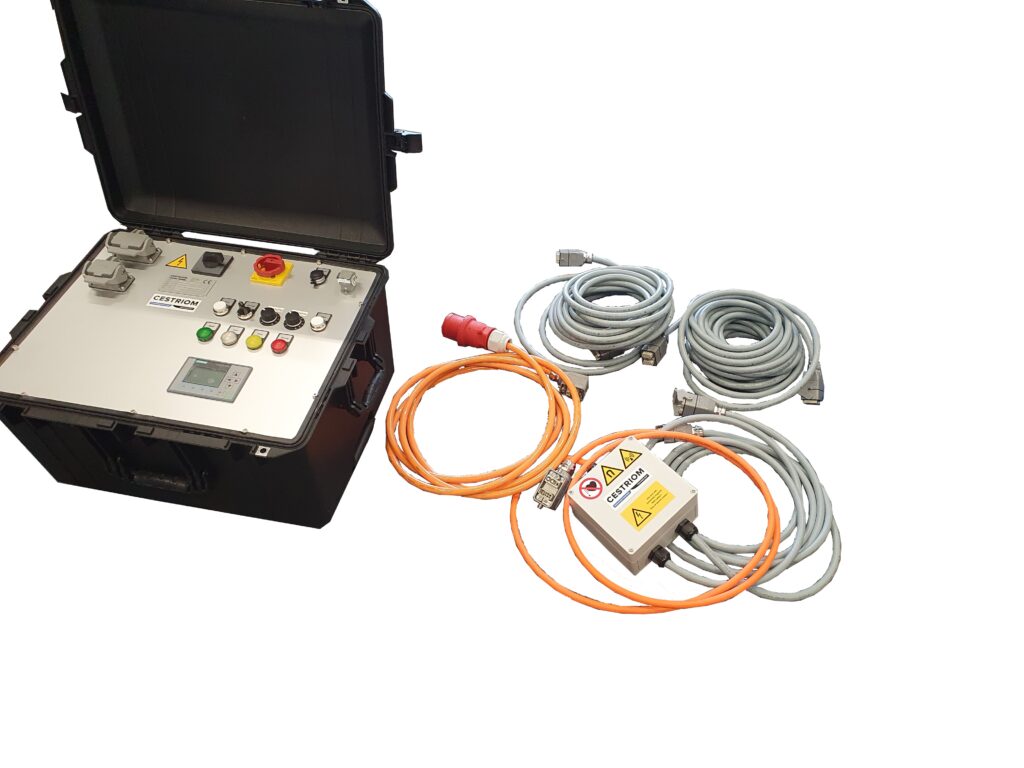
The MGFE demagnetizers are compact, mobile systems designed for the demagnetization and magnetization of ferromagnetic components. They are suitable for both the demagnetization of large steel parts and the high-precision demagnetization of sensitive precision components.
Unique technological features
The MGFE systems combine high power with precise control, offering:
- High-performance AC demagnetization using sine wave pulses with variable frequency
- Automatic DC field demagnetization and magnetization for special applications
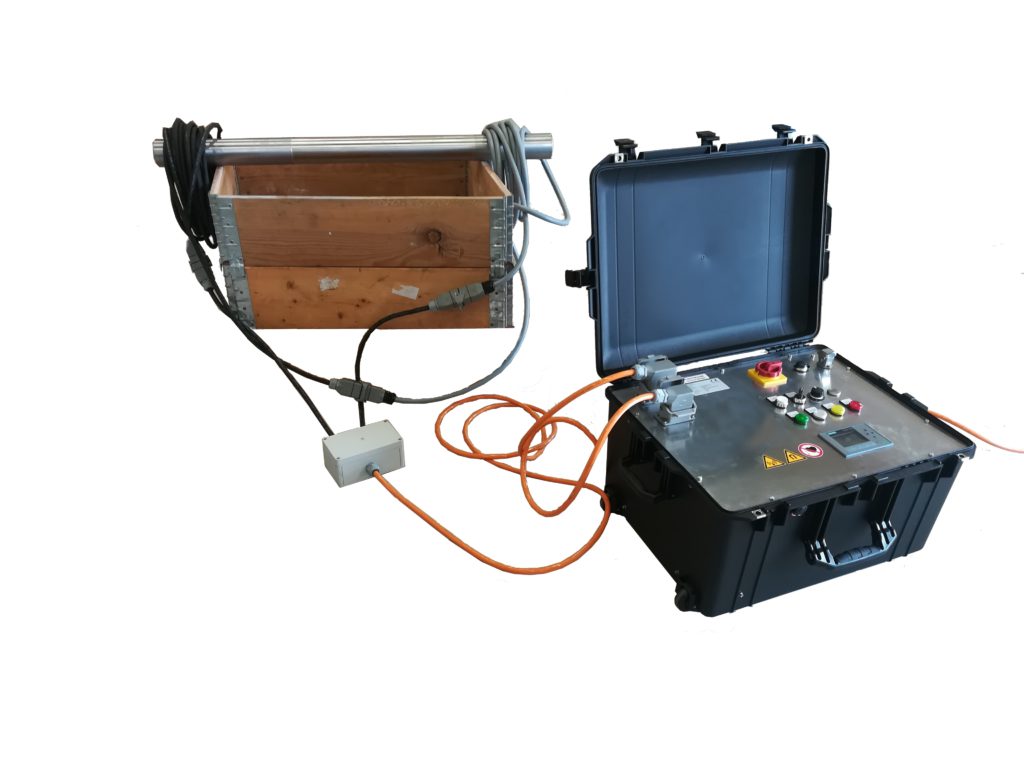
- All integrated into a compact, mobile and portable base unit weighing only approx. 24 kg
Flexible magnetic field cables for versatile applications
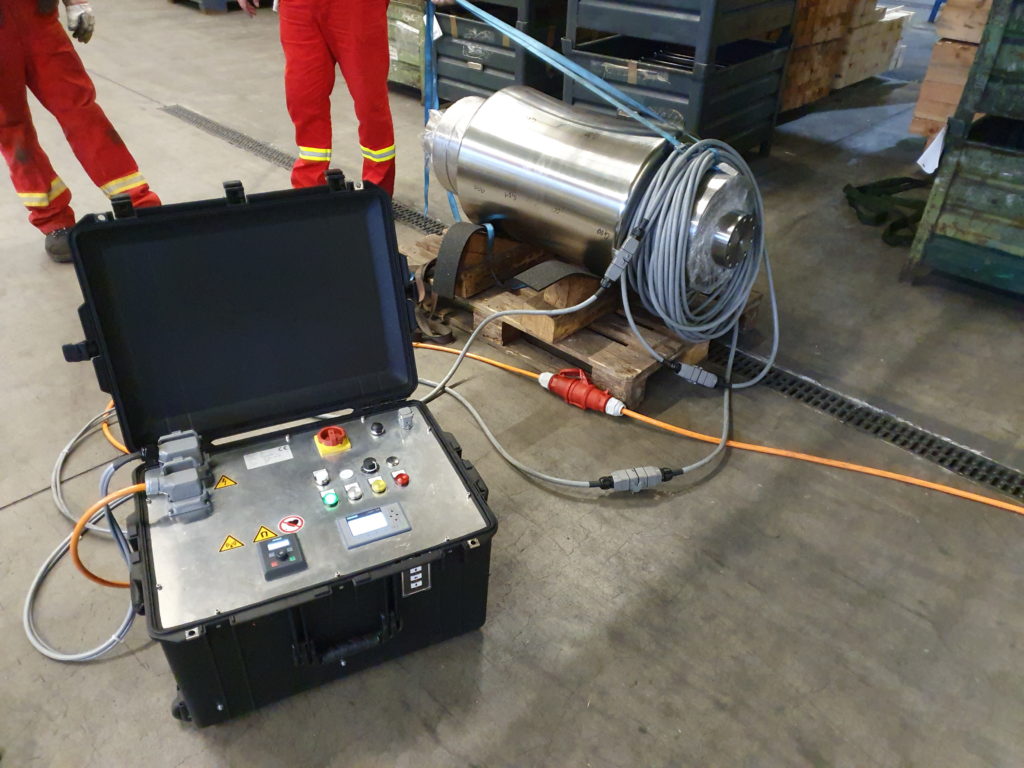
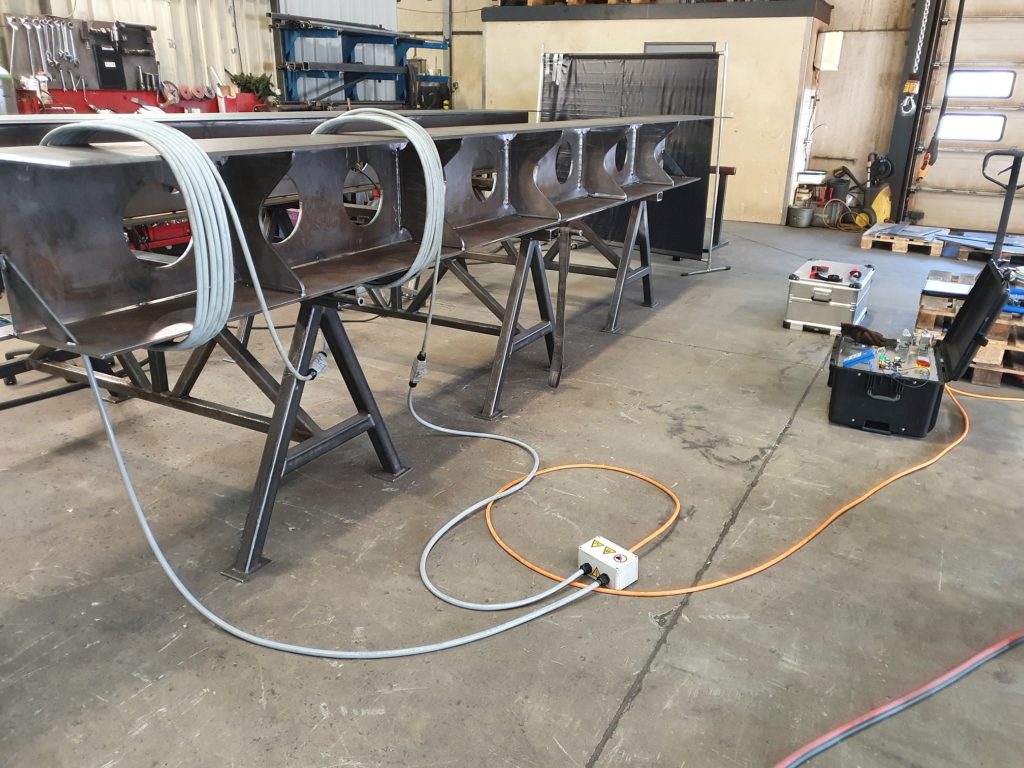
For demagnetizing individual components or entire machines, flexible magnetic field cables are used. The components to be demagnetized are either wrapped with the cables or the cable—coiled into a loop—is placed flat on the surface of the parts. Thanks to their flexibility, even hard-to-reach areas can usually be accessed effectively. The cables are connectable, allowing for adjustments in length, number of turns, and field strength.
Expansion with additional coil types
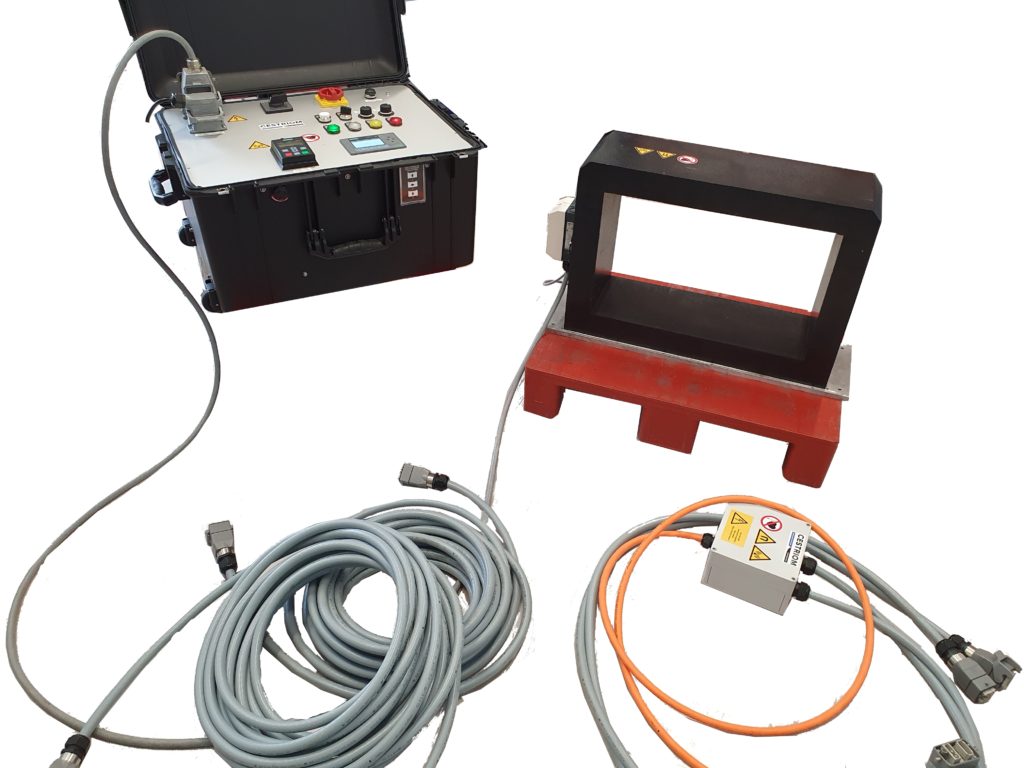
In addition to magnetic field cables, SSM coils or ISP impulse coils are also compatible with MGFE devices. For special requirements, we develop custom coils with tailored dimensions, specific field strengths or customized field distributions.
Training for safe and effective operation
Successful operation of the MGFE devices is ensured through a 1- to 2-day training program, conducted either online via video conference or on-site at the customer’s location.
Technological functions
- Demagnetization with low frequency sine pulse and precisely controlled field progression. Demagnetization with low frequency reduces eddy currents and thus causes high penetration depth in ferromagnetic material
- Demagnetization with sine wave pulse and progressive frequency technology. The increasing frequency in the decay phase of the sine pulse is particularly effective on small and medium-sized parts, as well as on surfaces
- (NEW 2025) Demagnetization with DC field reversals (downcycling). High penetration depth through DC field fluxing in massive objects. This method is required in some technical specifications
- Generation of DC field of adjustable amplitude and polarity, for defined magnetic fluxing and/or magnetization of steel parts
- Function for precise adjustment of magnetic symmetry. With this function, the magnetic field can be adjusted at defined points on a steel part (for example, at the ends of a steel shaft)
Specifications demagnetizer MGFE
| Variant | Electrical connection | Max. power [kVA] | Dimensions WxH xD [mm] | Weight [kg] |
| MGFE-30 | 1×200…240VAC 50/60Hz, 16A | 6,5 | 680×530 x380 | ~24 |
| MGFE-70 | 3×380…480VAC 50/60Hz, 32A | 27,2 | 680×530 x380 | ~24 |
- High magnetic flux: With winding diameter 500mm up to 30’000 AWdg with 4 magnetic field cables and MGFE-70. (With MGFE-30 approx. 17’000 AWdg)
- High precision demagnetization with alternating field sine pulse
- Demagnetization with DC field reversals
- Exceptional repeatability of the current profile and extensive field control adjustment capabilities
- Flexible magnetic field cables with different lengths, cross sections, and numbers of active conductors
- Use of SSM series coils or special coils
- Mobility: Lightweight, impact-resistant plastic case on wheels

Options

High field strength pulse coil for demagnetizing tool surfaces made of carbide and tool steel. The connection is made directly at the MGFE. Further customer-specific variants can be realized.

SSM series coils are designed for the demagnetization of small and medium-sized parts, offering high field strength and fast cycle rates. They connect directly to the MGFE unit. Custom variants can be developed to meet specific customer requirements.
Applications for MGFE
- Demagnetization in relation with non-destructive testing: in particular magnetic particle testing (MT) and eddy current testing (ET)
- Rotating equipment: demagnetization of shafts, bearing seats, housings, preparation for electrical runout tests with eddy current. Reducing residual magnetism induced shaft voltage.
- Mechanical engineering and tool making: demagnetizing of tools, machine parts, etc.
- Steel trade, supplier industry: Demagnetization to comply with residual magnetism limits
- Welding: Demagnetization as process preparation before welding
- R&D: special applications
More products: